The "Sunroom" Solution: UV Stability and Thermal Expansion in Modern Glass Architecture
Don't let the sun ruin your floors. Discover why CPF Floors' High-Density SPC is the only stable solution for sunrooms, floor-to-ceiling windows, and high-heat environments.
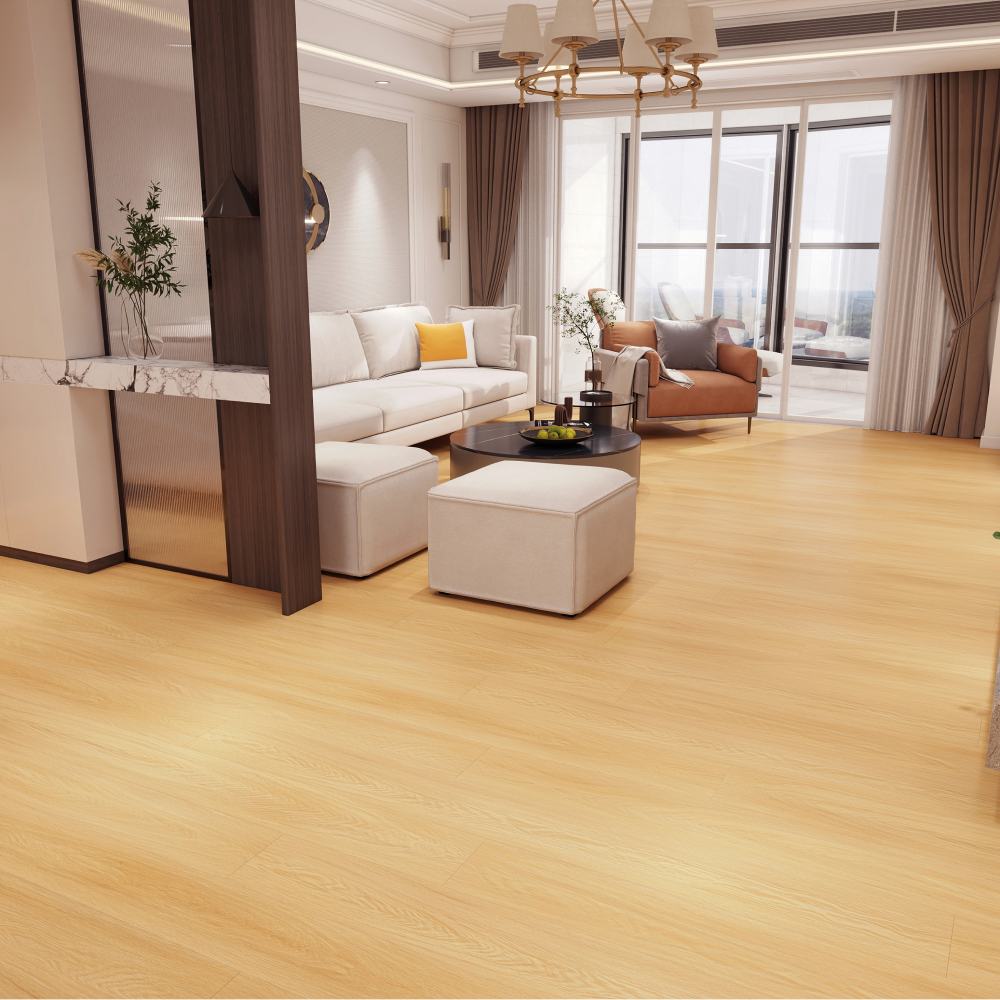
For years, the "Sunroom" or "Florida Room" was a forbidden zone for luxury vinyl flooring. Traditional LVP (Luxury Vinyl Plank) and even WPC (Wood Plastic Composite) are notoriously sensitive to heat; when exposed to direct sunlight through large windows, they expand, soften, and eventually "peak" or "gap" at the seams. For a contractor, a sunroom project used to mean a high risk of callbacks. However, the architectural trend toward massive glass walls and open, sun-lit spaces isn't slowing down. At CPF Floors, we’ve engineered a technical answer to this environmental challenge. By utilizing a High-Density Rigid Core (SPC) with advanced UV inhibitors, we provide a floor that remains dimensionally stable even under intense solar gain. In this article, we will explore the physics of thermal expansion and why CPF’s "Smart Flooring" is the only reliable choice for the modern, sun-drenched East Coast home.
The Greenhouse Effect: Why Heat Destroys Standard Vinyl
In a room with floor-to-ceiling windows, surface temperatures on the floor can easily exceed 120°F (50°C), even if the AC is running. Traditional vinyl is thermoplastic, meaning it softens as it gets hot.
- The "Peaking" Problem: As the planks expand from the heat, they run out of room at the walls and start to push against each other, causing the ends to "peak" or lift.
- The "Telegraphing" Risk: Softened vinyl loses its structural integrity, allowing the texture of the subfloor to show through (telegraph) more prominently under the sun’s glare.
The Limestone Core: Engineering for Thermal Stability
Stone Over Plastic
Unlike WPC, which contains air-filled wood fibers that act as insulators and expand rapidly, CPF’s Rigid Core SPC is composed of nearly 70% calcium carbonate (limestone). Stone does not expand and contract with the same volatility as plastic or wood.
High-Density Molecular Bonding
Our manufacturing process uses high-pressure bonding to ensure the core remains inert. This means that even in a South Carolina sunroom or a Miami penthouse with 360-degree glass, the floor maintains its "flatness" and locking-system integrity regardless of the temperature spikes.
UV-Cured Coatings: Preventing Fading and Discoloration
Heat is only half the battle; the other half is Ultraviolet (UV) radiation. Constant exposure to UV rays acts like bleach on a floor's design layer, causing "ghosting" or yellowing over time.
- Advanced Shielding: Every CPF plank is finished with a multi-layer, UV-cured ceramic bead coating.
- Preserving the Aesthetic: This coating acts like a "high-SPF sunscreen" for your floor, ensuring that the natural oak or pine visual stays vibrant for decades, even in rooms that receive 10+ hours of direct sunlight a day.
The 1/4" Rule: Best Practices for High-Sun Installations
Even with the most stable floor in the market, professional installation is key in high-heat zones.
- Expansion Gaps: Never "dead-end" a floor against a sliding glass door frame. Always maintain a 1/4" to 3/8" expansion gap to allow the house's structure to move.
- Acclimation Check: While SPC is stable, we recommend letting the material sit in the "operating temperature" of the room to ensure the locking system is at its most resilient state during install.
- Window Treatments: For extreme environments, suggest UV-filtering window films to your clients—it protects the floor, the furniture, and their skin.
Stop fearing the sunroom. With CPF Floors, you can offer your clients the beauty of wood in the brightest rooms of their homes without the fear of structural failure. Contact us today and give your business the "Sun-Proof" edge it needs to dominate the coastal market.